⚽ Match Analysis
In a game defined by structure and discipline, the outcome was ultimately shaped by moments rather than sustained dominance.
Both sides approached the contest with clear tactical intentions, leading to a closely contested match where control frequently shifted but clear chances remained limited.
First half: Structure over risk
The opening phase was characterised by caution.
Both teams prioritised defensive organisation, maintaining compact shapes and limiting space between the lines. Midfield congestion made progression difficult, forcing play wide and reducing central penetration.
Possession was controlled but largely contained, with neither side committing excessive numbers forward. As a result, opportunities were minimal, and much of the play unfolded in non-threatening areas.
Key tactical battle: Midfield control
The central area proved decisive.
One side focused on maintaining positional discipline, ensuring numerical stability in midfield, while the other attempted to create overloads through movement and rotations.
However, pressing intensity varied throughout the match. When coordinated effectively, it disrupted build-up play and forced turnovers. When not, it allowed the opposition to settle and recycle possession.
This inconsistency played a significant role in shaping momentum.
Second half: Increased urgency
After the interval, the tempo shifted.
Both teams showed greater intent going forward, committing more players into advanced areas. This created transitional moments, particularly when possession was lost in midfield.
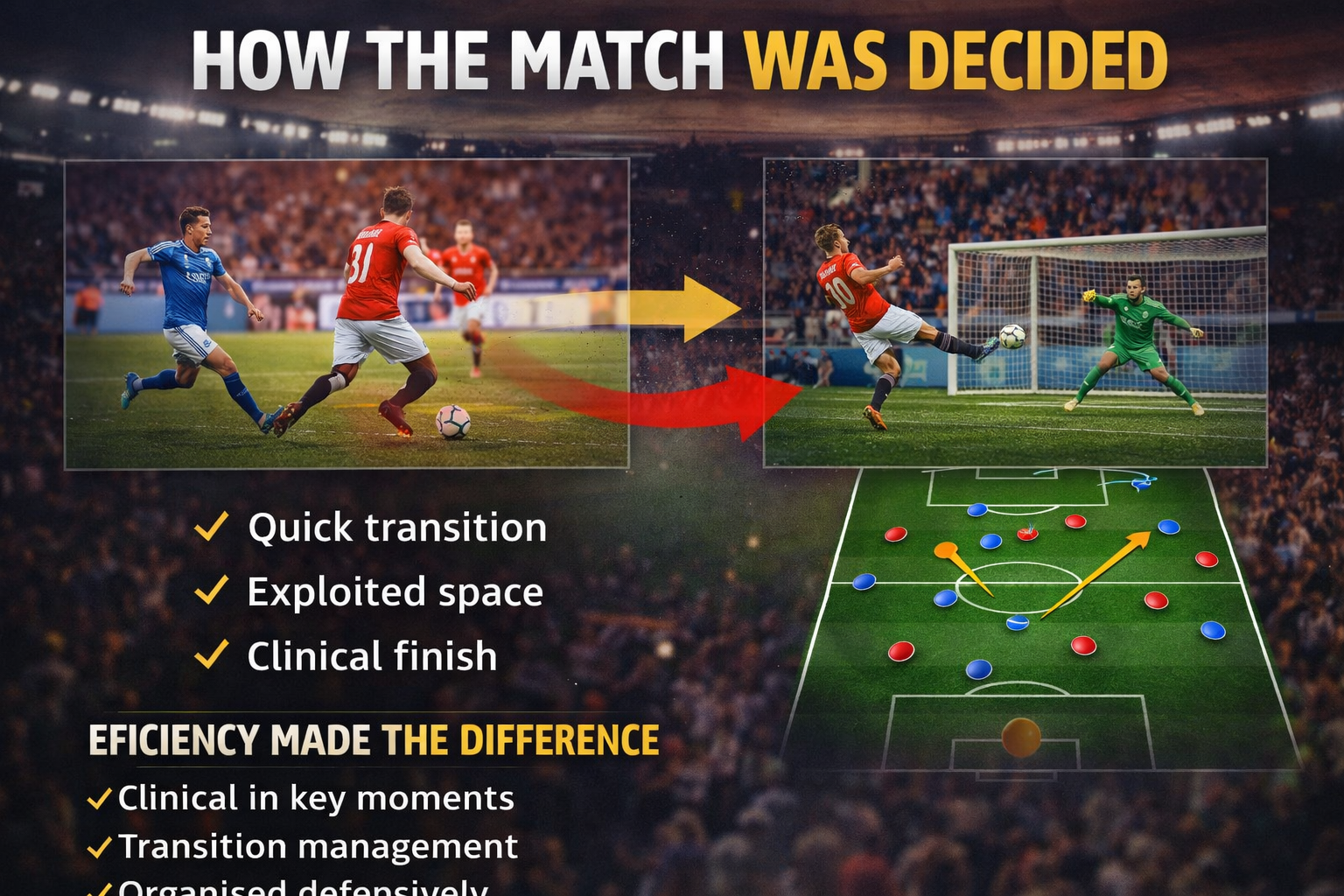
The decisive phase of the match came during one such transition, where defensive positioning was briefly compromised, allowing space to be exploited.
At this level, such moments are often enough.
Decisive moment
The winning goal highlighted a combination of:
- Quick transition from defence to attack
- Effective use of space between defensive lines
- Clinical execution in the final third
It was less about sustained pressure and more about efficiency.
Game management
Following the breakthrough, the leading side shifted approach.
Defensive lines dropped slightly, with emphasis placed on compactness and limiting central access. Possession was used selectively—not to dominate, but to control tempo and reduce risk.
The opposition increased pressure in the closing stages but struggled to create clear chances against a well-organised defensive block.
Analysis: What made the difference
Several factors proved decisive:
- Efficiency in key moments rather than overall dominance
- Defensive organisation in critical phases
- Transition management, both offensively and defensively
- Decision-making under pressure
Matches of this nature are often decided by small margins rather than clear superiority.
Conclusion
While the contest remained balanced for long periods, the difference ultimately came down to execution in decisive moments.
Both teams demonstrated structure and discipline, but in tightly contested matches, the ability to capitalise on limited opportunities remains the defining factor.