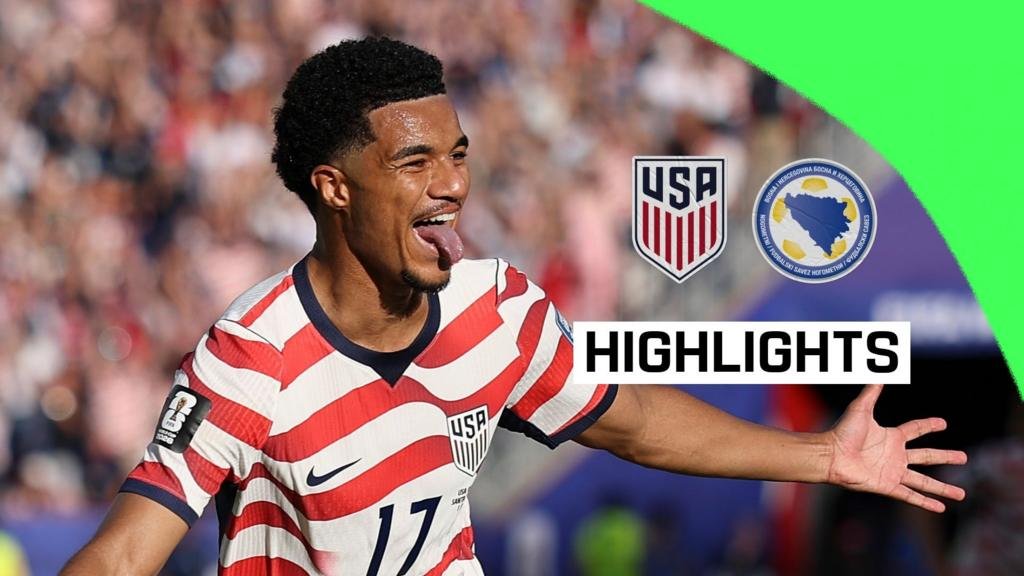
Balogun’s Impactful Performance Overshadowed by Red Card
Folarin Balogun emerged as a pivotal figure in the United States’ encounter against Bosnia-Herzegovina, showcasing his goal-scoring prowess before his evening ended on a bitter note with a red card. His solitary goal not only underscored his growing significance within the squad but also propelled the United States into the last 16 of the World Cup. The win, however, was tainted by a disjointed performance from the Americans, who faced a lackluster Bosnian side lacking the sting necessary to mount an effective challenge.
Strategic Formation and Game Plan
The United States deployed a 4-3-3 formation, aiming to leverage width and pace on the flanks. This strategic choice allowed Balogun to operate effectively in the attacking third, often drifting wide and creating opportunities through his dynamic movement. The midfield trio aimed to control possession and dictate the tempo, but the transition phases frequently revealed gaps, especially when Bosnia sought to counter-attack. Bosnia-Herzegovina, using a compact 4-2-3-1 setup, struggled to break through the American defense, largely relying on isolated moments of individual brilliance that were few and far between.
Key Moments and Turning Points
Balogun’s opening goal came at a critical juncture, providing the United States with a much-needed boost in confidence. A well-timed through ball from the midfield found him in space, and his clinical finish demonstrated both composure and striking ability. This moment, however, became a double-edged sword as the U.S. team, instead of consolidating their lead, seemed to take their foot off the pedal. The lack of urgency allowed Bosnia to find their rhythm momentarily, but their efforts were often squandered or thwarted by the American defense.
Player Performances and Ratings
Balogun’s performance was remarkable, finishing the match with a goal that showcased his striking ability. However, the red card, received for a reckless challenge, overshadowed his contribution and left his team vulnerable for the closing stages of the game. The midfielders, while possessing technical skill, were intermittently ineffective in breaking down Bosnia’s defensive setup. Weston McKennie and Yunus Musah showed glimpses of brilliance but lacked the consistency needed to dominate the midfield battle.
Bosnia-Herzegovina’s Struggles
For Bosnia-Herzegovina, the match was a frustrating experience. Despite their solid defensive setup, they seemed unable to transition effectively into attack. Their forwards often found themselves isolated, with little support from the midfield. The team’s tactical approach did not capitalize on the chances they managed to create. The absence of a cohesive game plan left them at the mercy of the American side, who slowly regained control after Balogun’s goal.
Coaching Decisions and Substitutions
U.S. coach Gregg Berhalter’s decisions throughout the match were prominent in maintaining control. Balogun’s initial positioning and freedom were carefully orchestrated to exploit the weaknesses in Bosnia’s defense. However, after the red card, Berhalter’s choice to adopt a more defensive posture by introducing further substitutes was a gamble that paid off, as the U.S. managed to navigate the remaining minutes with resilience, albeit with considerable pressure mounted by the Bosnian side.
Looking Ahead to the Knockout Stages
As the United States advance to the knockout stages, the victory against Bosnia-Herzegovina presents both a promising pathway and a stark reminder of the adjustments needed—particularly in maintaining discipline and tactical focus. Balogun’s brilliance will be critical, but his untimely dismissal raises questions about squad depth and game management. With tougher opponents on the horizon, the U.S. will need to refine their tactical discipline while enhancing their attacking fluidity to make a deeper run in the tournament.