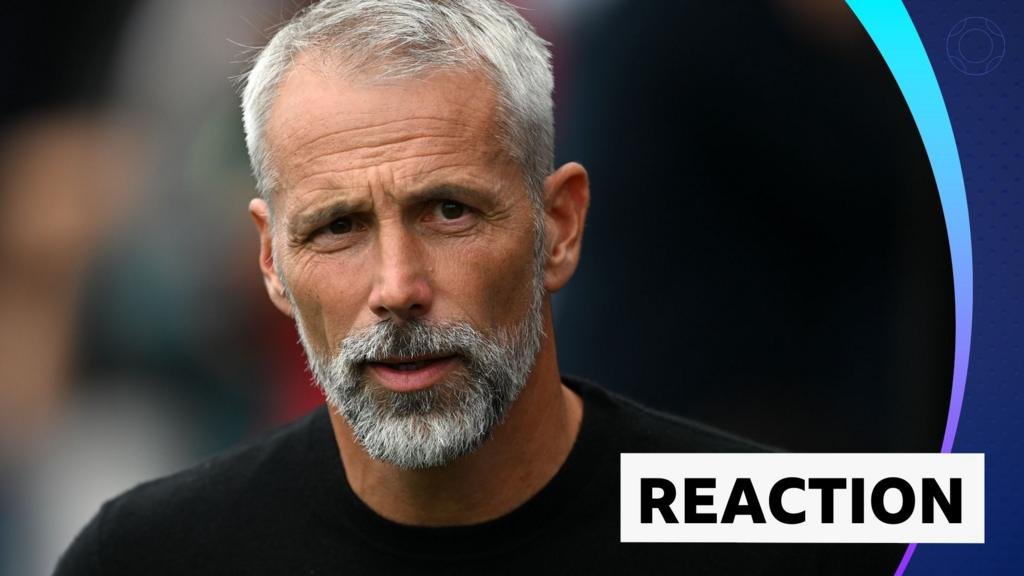
Rose Laments Injury-Time Slip as Bournemouth and Everton Share Spoils
Bournemouth’s head coach, Marco Rose, expressed his frustration following a late equalizer conceded by his team, which he described as “slapstick.” The Cherries were forced to settle for a 1-1 draw against Everton at the Vitality Stadium, a result that left both sides reflecting on missed opportunities and what could have been.
Match Analysis: A Tactical Stalemate
The match unfolded as a tactical battle, with both teams employing contrasting strategies that shaped their performances. Bournemouth started brightly, pressing high and exploiting the flanks, trying to stretch Everton’s defense. In contrast, the away side focused on a more counter-attacking approach, looking to absorb pressure and capitalize on any defensive lapses.
Key Moments and Turning Points
The breakthrough came for Bournemouth in the 35th minute when a well-executed corner kick routine found its way to the back of the net. The home side’s ability to create danger from set-pieces has been a hallmark of their play this season, and it paid dividends here. However, the match shifted dramatically in the second half, as Everton began to find more rhythm, aided by a tactical adjustment to push their full-backs higher up the pitch.
Player Performances: Stars and Struggles
Several players stood out during the match. Bournemouth’s goalkeeper was particularly impressive, making several crucial saves that kept the scoreline in their favor for much of the contest. His ability to command the area and thwart Everton’s attempts not only inspired confidence among his teammates but also frustrated the opposition. Conversely, some Bournemouth players struggled with consistency, particularly in midfield where they were often outmuscled during key phases of play.
Game-Changing Decisions and Substitutions
Substitutions played a pivotal role for both sides. Everton’s manager introduced fresh legs in the final third, which injected urgency into their attack. These changes proved crucial, as they helped to maintain pressure on Bournemouth’s defense leading to the late equalizer. Meanwhile, Rose’s decisions to retain the majority of his starting players backfired in the closing stages, as fatigue became evident and defensive lapses occurred.
Formation and Tactical Analysis
Both teams lined up with formations that reflected their strategies. Bournemouth operated with a 4-2-3-1 formation that offered width and support in attack, while ensuring a two-man pivot to shield the backline. Everton, on the other hand, utilized a compact 4-3-3 formation that allowed them to reclaim possession quickly and engage in swift counter-attacks. This tactical setup changed the dynamics of the midfield, often leaving Bournemouth to chase shadows.
Final Thoughts on the Draw
The draw leaves Bournemouth with mixed feelings, as they displayed moments of promise but ultimately fell short in maintaining their lead. The late goal is a crucial learning point, underscoring the importance of concentration until the final whistle. For Everton, the point reinforces their resilience and strategic adaptability, while highlighting their potential for growth moving forward. As both teams look ahead, the tactical insights gleaned from this match will be invaluable in preparing for future fixtures.