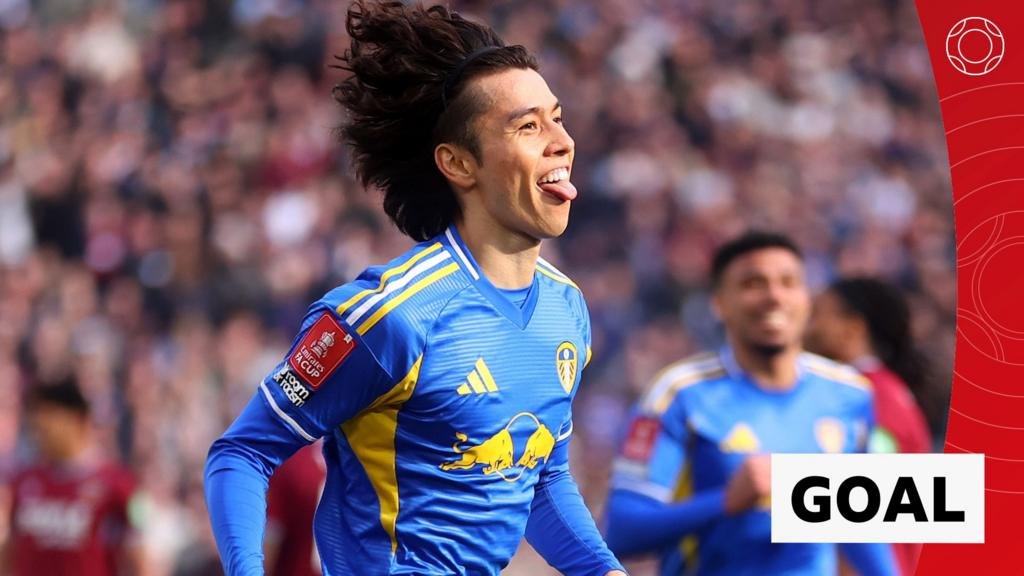
Tanaka’s Impact Sparks Leeds United’s Advances
In a thrilling FA Cup quarter-final clash, Leeds United’s Ao Tanaka showcased his skills by both initiating and concluding a beautifully orchestrated play that ultimately put his team ahead against West Ham United. This moment underscored not only Tanaka’s technical prowess but also the strategic coherence of Leeds’ attacking approach throughout the match.
Fluid Movement and Teamwork
The goal emerged from a fluid exchange of passes that highlighted Leeds’ tactical emphasis on quick ball movement and spatial awareness. Starting from deep in their half, the team displayed exceptional composure as they transitioned from defense to attack. Tanaka, positioned effectively to receive the ball, demonstrated remarkable vision, quickly assessing the situation before orchestrating the counterattack. His ability to read the game set the stage for a decisive offensive push.
Key Tactical Decisions
Manager Daniel Farke’s decision to implement a high-pressing formation allowed Leeds to recover possession rapidly and exploit West Ham’s defensive lapses. The 4-2-3-1 formation facilitated fluid transitions and encouraged wide play, stretching the opposition. This tactical setup played a pivotal role in creating the space that Tanaka utilized to influence the buildup leading to the goal.
The Defining Moment
At the heart of the play leading to the goal was an incisive through ball played by Leeds’ midfielder, cutting through the West Ham defense. Tanaka’s intelligent movement allowed him to evade markers and position himself perfectly to receive the pass. As he approached the goal, his composure under pressure was evident; he executed a smart finish that reflected both skill and strategic preparation.
Player Performances That Shone
Beyond Tanaka’s brilliance, the match saw standout performances from Leeds’ entire midfield unit. The synergy between the attacking midfielders and strikers was clear, as they repeatedly found avenues to exploit West Ham’s back line. Notably, the defensive resilience displayed by Leeds was vital, ensuring that West Ham’s attempts at levelling the score were consistently thwarted. Players like Ethan Ampadu and Pascal Struijk epitomized the defensive stability crucial for securing Leeds’ lead.
Turning Points and Momentum Shifts
The momentum of the game shifted significantly after Tanaka’s goal, with Leeds growing in confidence and West Ham struggling to assert themselves. This turning point was marked by West Ham’s increasing frustration, which led to lapses in concentration, particularly in their defensive third. Leeds capitalized on this, creating several subsequent opportunities that could have extended their lead further, showcasing their attacking depth and adaptability.
Overall Match Dynamics
As the match progressed, Leeds maintained their aggressive stance, employing a structured defensive formation that made it difficult for West Ham to penetrate. The interplay between the wings and the central attacking third demonstrated Leeds’ strategic intent to exploit gaps and create space for runners like Tanaka. This blend of tactical awareness and individual brilliance ultimately defined the match, pushing Leeds United into the next round of the FA Cup with authority and flair.