Record-Breaking Chaos: Analyzing the Under-20s Semi-Final Clash
A remarkable and tumultuous match unfolded in Brazil as the semi-final first leg of the Minas Gerais Under-20 Championship between Uberlandia and Mamore set a world record with 51 red cards issued. This unprecedented event saw a staggering 43 players and 8 coaching staff members dismissed, creating a spectacle that overshadowed the football itself.
Previously, the record for the most red cards in a single match stood at 36, set during a fifth-division encounter in Argentina back in 2011. The fallout from this recent match led to significant involvement from local authorities, with Brazilian news outlet O Tempo reporting that military police were summoned due to extensive damage inflicted on the Parque do Sabia Stadium. Such incidents expose a concerning trend in youth football, where discipline and control can slip away amid intense competition.
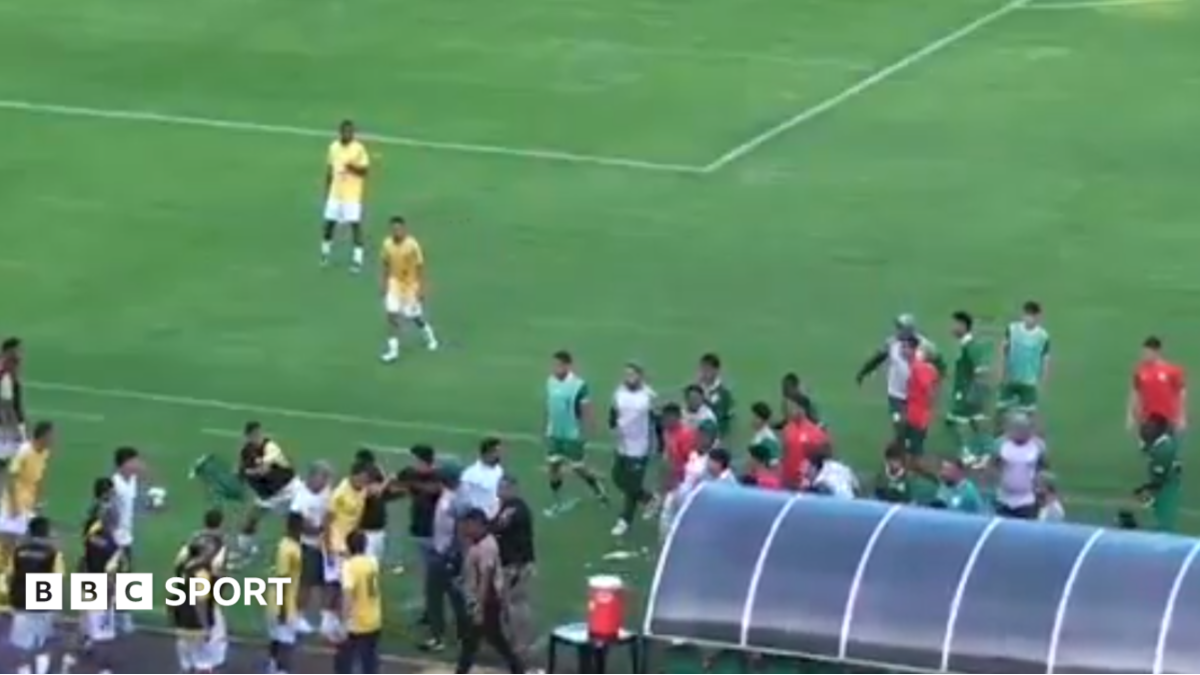
The catalyst for this chaotic scene was ignited in the second half. Mamore’s Davi, celebrating his team’s 3-1 lead, directed provocative taunts toward the Uberlandia bench—an act that triggered an on-pitch confrontation. Uberlandia’s goalkeeping coach, Paulo Sergio Dias Dos Santos, reacted swiftly, sprinting onto the field to confront Davi, escalating tensions and sparking a mass altercation. It is telling that three players had already received their marching orders earlier in the match, indicating a rising tension that eventually boiled over.
As the referee, Fernando Patrick Drosghic Modesto, attempted to regain control, the situation deteriorated further. The brawl lasted long enough to necessitate a 40-minute pause, after which Modesto opted to abandon the match entirely, a decision underscored by the disorder that had unfolded.
The chaos extended beyond the pitch, with a police report detailing extensive property damage, including 14 broken doors, shattered windows, and ruined shower facilities within the stadium. This level of destruction speaks volumes about the emotional investment and volatility present in youth football matches, highlighting the precarious balance between competition and sportsmanship.
In the wake of the turmoil, Uberlandia officially announced their concession of the second leg of the semi-final due to Mamore’s depleted squad, which was left with only seven eligible players following the mass dismissals. They characterized this decision as a gesture of fair play, allowing Mamore to advance to the finals unopposed. This move reflects a commendable commitment to integrity, opting to prioritize sportsmanship over gaining advantage through a depleted opponent.
As Uberlandia now turns its focus toward a third-place playoff, this incident serves as a sobering reminder of the challenges that can arise in youth sports, where competitive spirit and emotional investments can, at times, overshadow the very essence of the game. It raises pertinent questions regarding the management of player behavior and the need for stricter control measures to mitigate such explosive situations in the future.