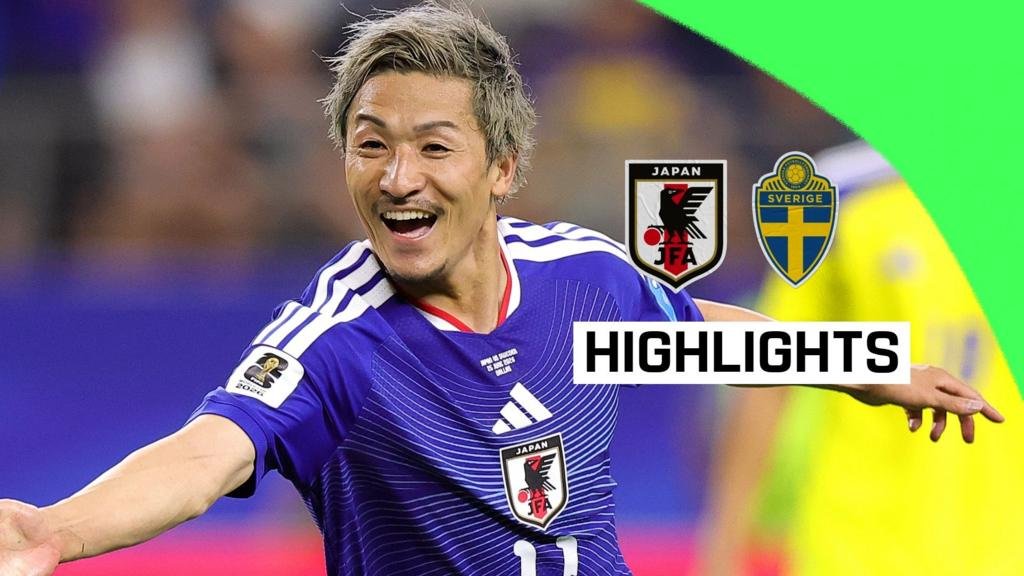
Maeda’s Opener and Elanga’s Equalizer Define Competitive Clash
In a riveting encounter at the World Cup, Daizen Maeda showcased his striking prowess with a well-placed finish that initially put Japan ahead. However, Sweden responded with resilience, leveling the match through Anthony Elanga’s spectacular long-range strike, resulting in a tightly contested 1-1 draw. This outcome secured qualification for both teams to the knockout stages, a testament to their tactical prowess and determination in Group F.
Strategic Formations and Tactical Nuances
Japan set up in a dynamic 4-2-3-1 formation, looking to dominate possession and press high up the pitch. This approach was evident as they controlled the early exchanges, utilizing Maeda’s pace and positioning to exploit Sweden’s defensive vulnerabilities. Meanwhile, Sweden adopted a more conservative 4-4-2 shape, focusing on defensive solidity and hitting Japan on the counter-attack. This tactical divergence created a compelling tactical battle, as both teams sought to impose their respective styles on the game.
Key Moments and Game-Changing Decisions
The match turned when Maeda took advantage of a defensive lapse to net the opener for Japan in the 28th minute. His ability to read the play and find the right space demonstrated his sharp footballing intelligence, allowing him to capitalize on Sweden’s momentary disorganization. However, Sweden’s response was immediate and impactful. Elanga, finding space on the edge of the box, unleashed a stunning long-range effort that left Japan’s goalkeeper with no chance, equalizing just before half-time.
Player Performances: Standouts and Disappointments
Daizen Maeda deservedly earned accolades for his intelligent movement and clinical finishing, showcasing his importance in Japan’s attacking framework. Each time he was on the ball, he posed a persistent threat to Sweden’s defense. Conversely, Anthony Elanga emerged as a pivotal figure for Sweden; his equalizer not only demonstrated his technical ability but also highlighted his skill in crucial moments. The performance of both players underlined their teams’ reliance on individual brilliance to change the course of the match.
Second Half Adjustments and Tactical Battles
As the second half unfolded, both coaches made tactical adjustments in an effort to seize control of the match. Japan introduced fresh legs in midfield to maintain their high press, while Sweden opted for a more aggressive approach, pushing their full-backs higher to support Elanga and their target forwards. This change opened up spaces in the midfield, creating opportunities for counter-attacks but also exposing both defenses to potential risk. The ebb and flow of the game was palpable, as momentum shifted constantly between the two sides.
Defensive Resilience: A Deciding Factor
Defensively, Japan exhibited strong organization, effectively neutralizing Sweden’s attempts to break through their lines after the equalizer. Norway’s Jonathan Tah showed leadership at the back, managing to mitigate several threats. Sweden, in turn, became more proactive in their defensive engagements, with their midfielders working hard to disrupt Japan’s rhythm. The tactical discipline displayed by both teams emphasized their commitment to not only attack but also to maintain a solid backline in high-stakes scenarios.
Looking Ahead: Implications for the Knockout Stages
This draw marks a significant point for both nations as they advance to the knockout stages with confidence. Japan will look to harness their attacking fluidity while tightening their defensive structure, whereas Sweden aims to build on their resilience and capitalize on the creative exploits of players like Elanga. As both teams continue their World Cup journey, their performances in this match provide critical insights into their tactical capabilities and potential pathways to success.